January 2026 - May 2026 (12th Grade)
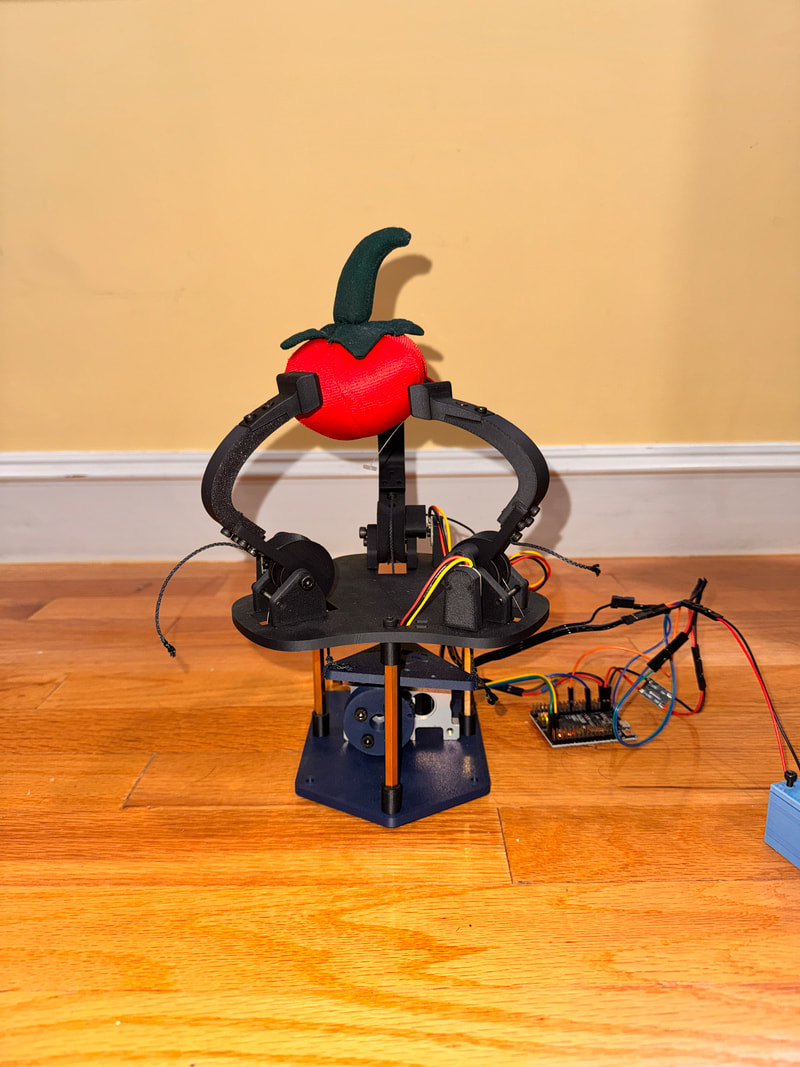
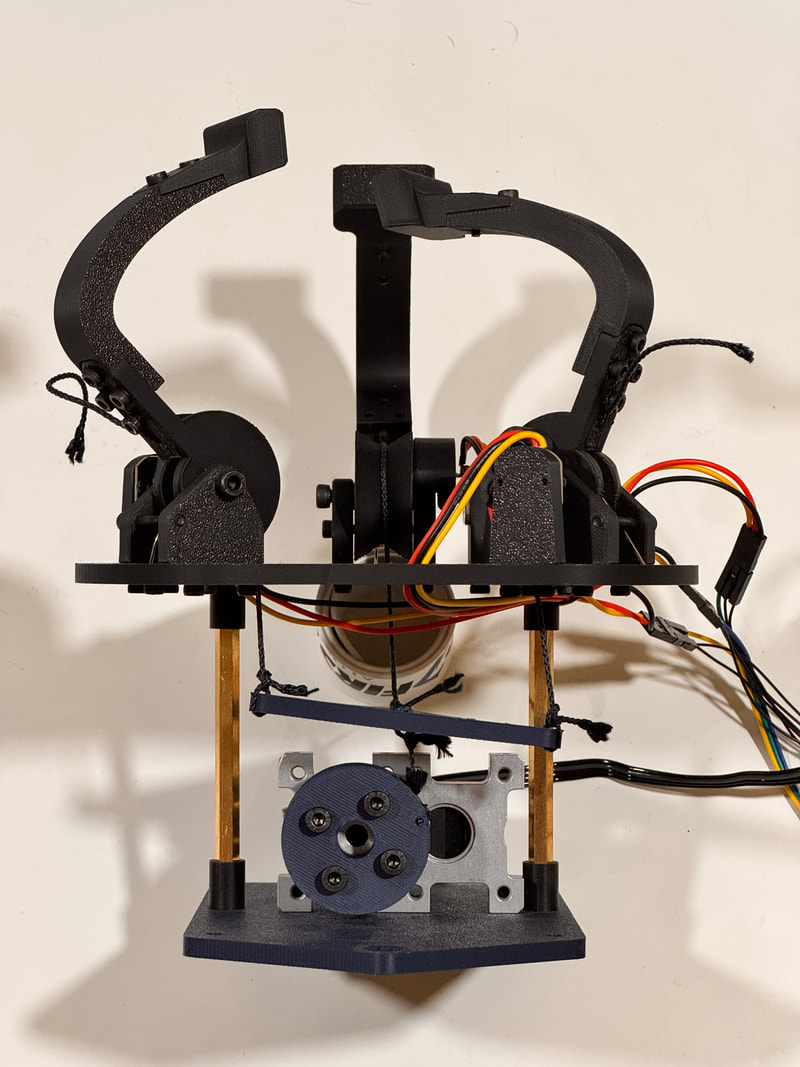
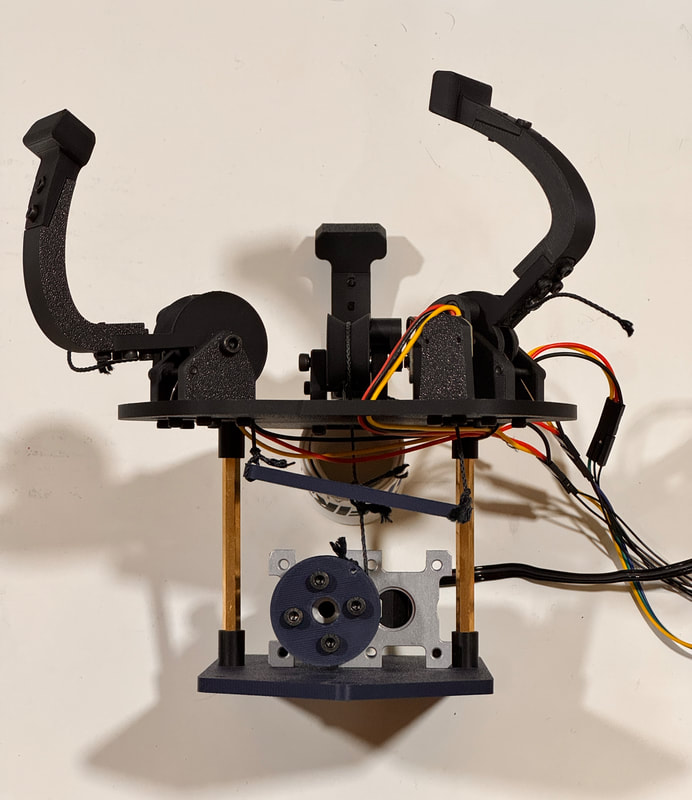
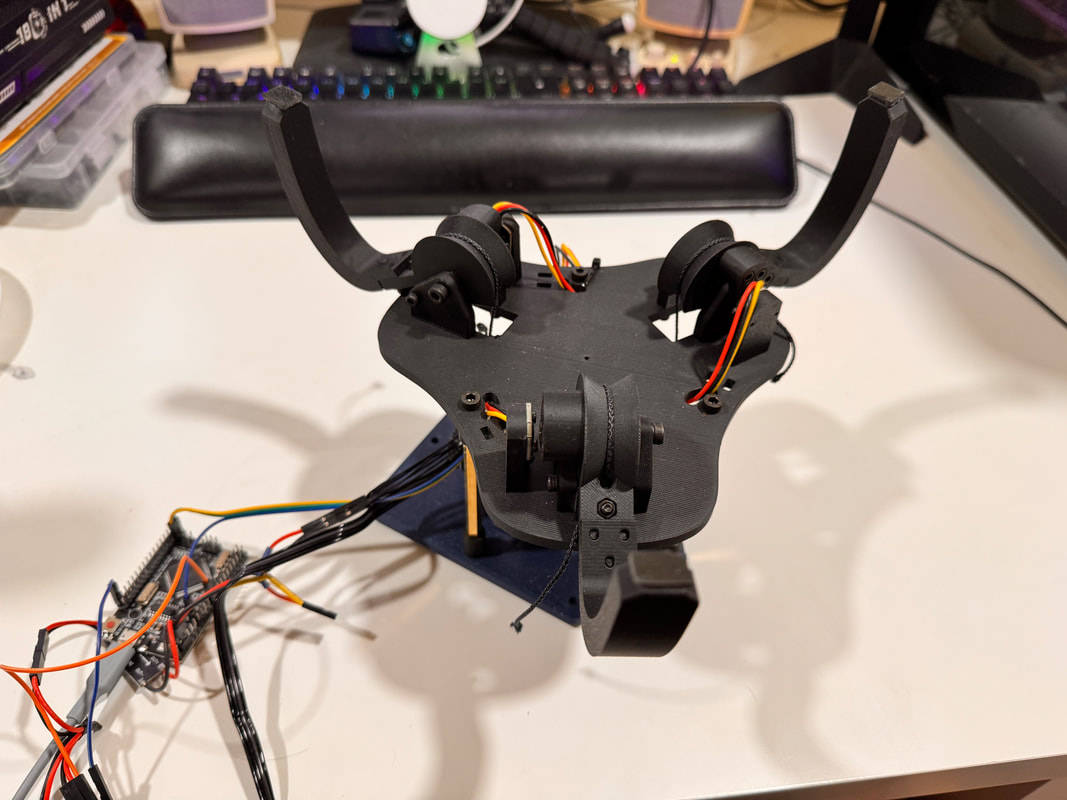
- Solved the challenge of safely grasping fragile and irregular objects without crushing them by building a three-jaw underactuated gripper that conforms to objects and detects secure grasps through encoder-based proprioception.
- Developed the system for assistive robotics, aiming to help users handle food and small everyday objects more safely and independently in unpredictable home environments.
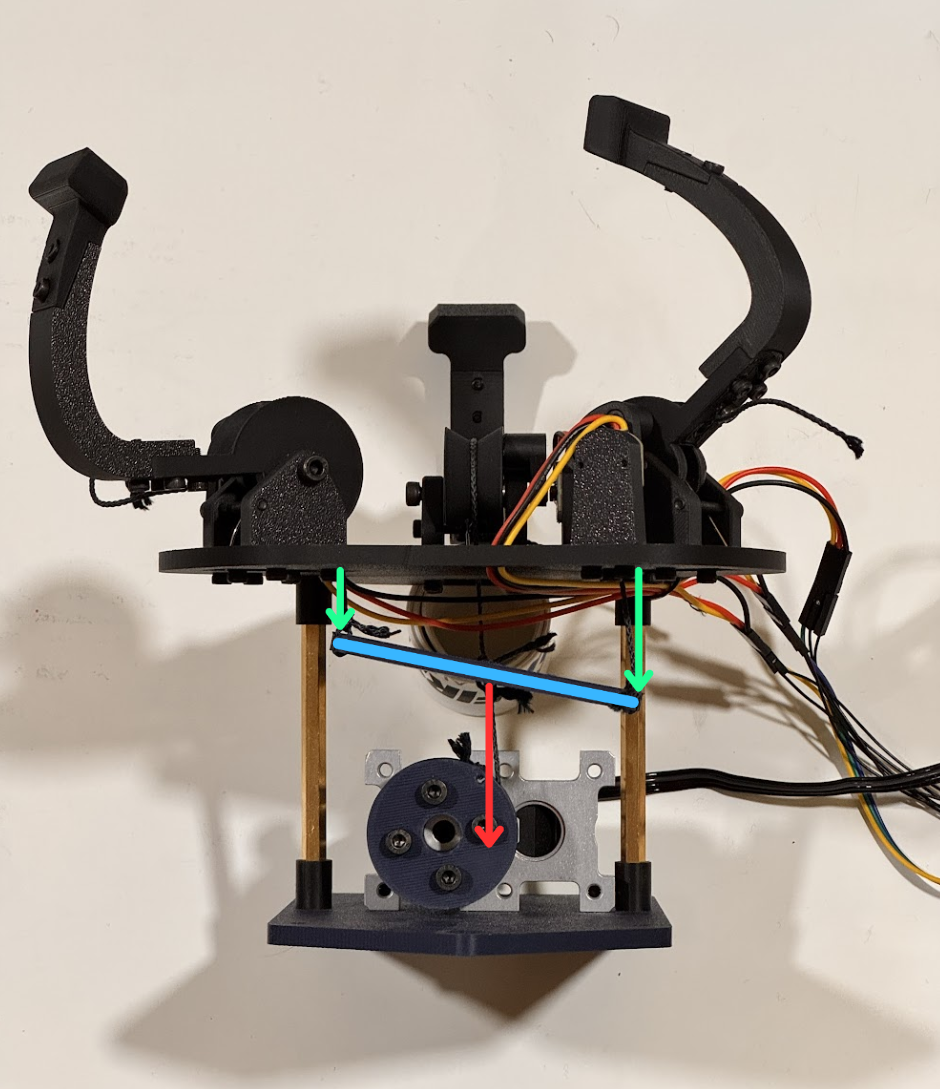
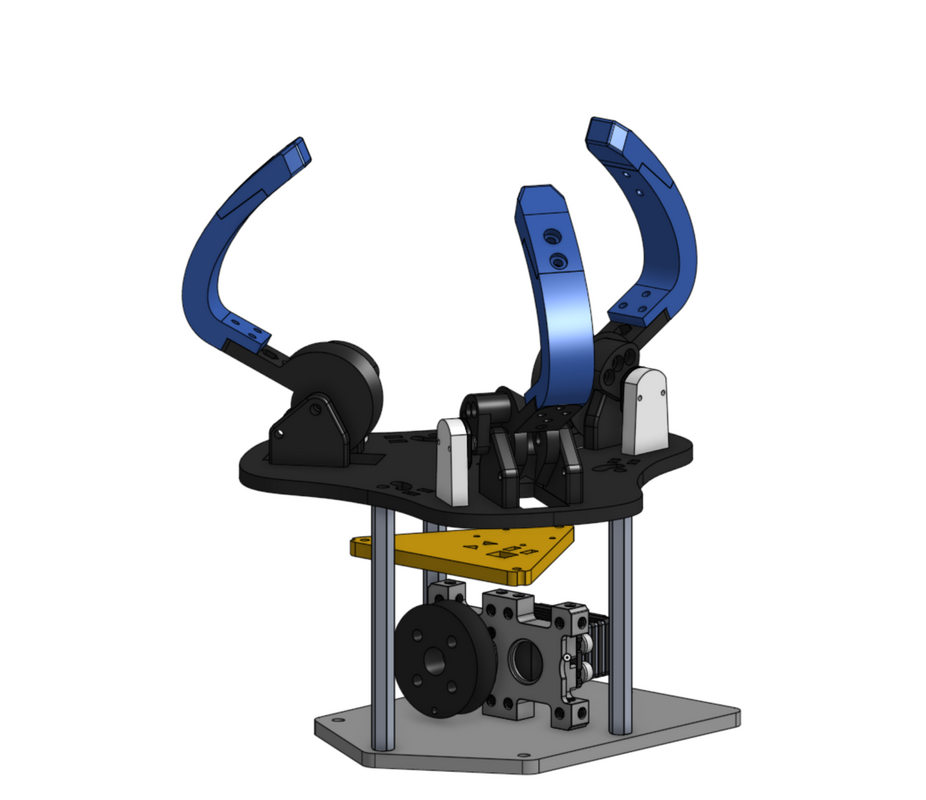
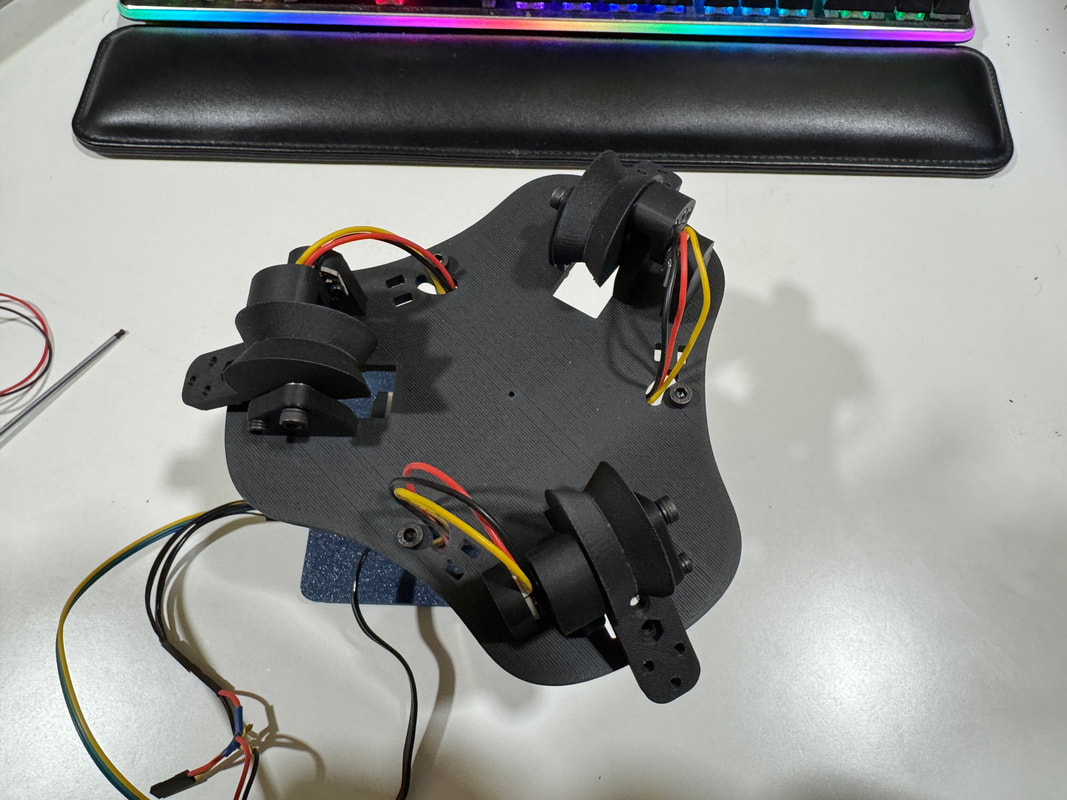
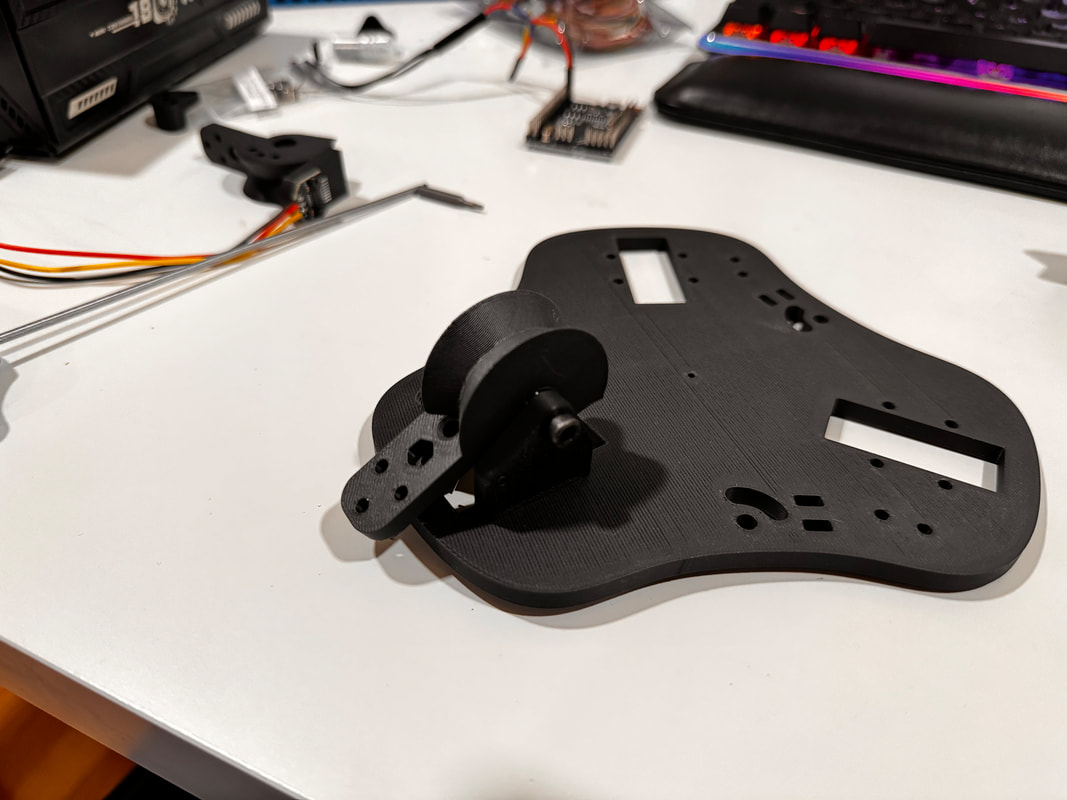
- Engineered a triangular seesaw differential and tendon-driven transmission to distribute one servo's power across three independently adapting jaws, with torsion springs providing passive return.
- Integrated absolute rotary encoders and programmed an ATmega 2560 microcontroller to acquire sensor data, control the servo, and communicate with a computer over serial.
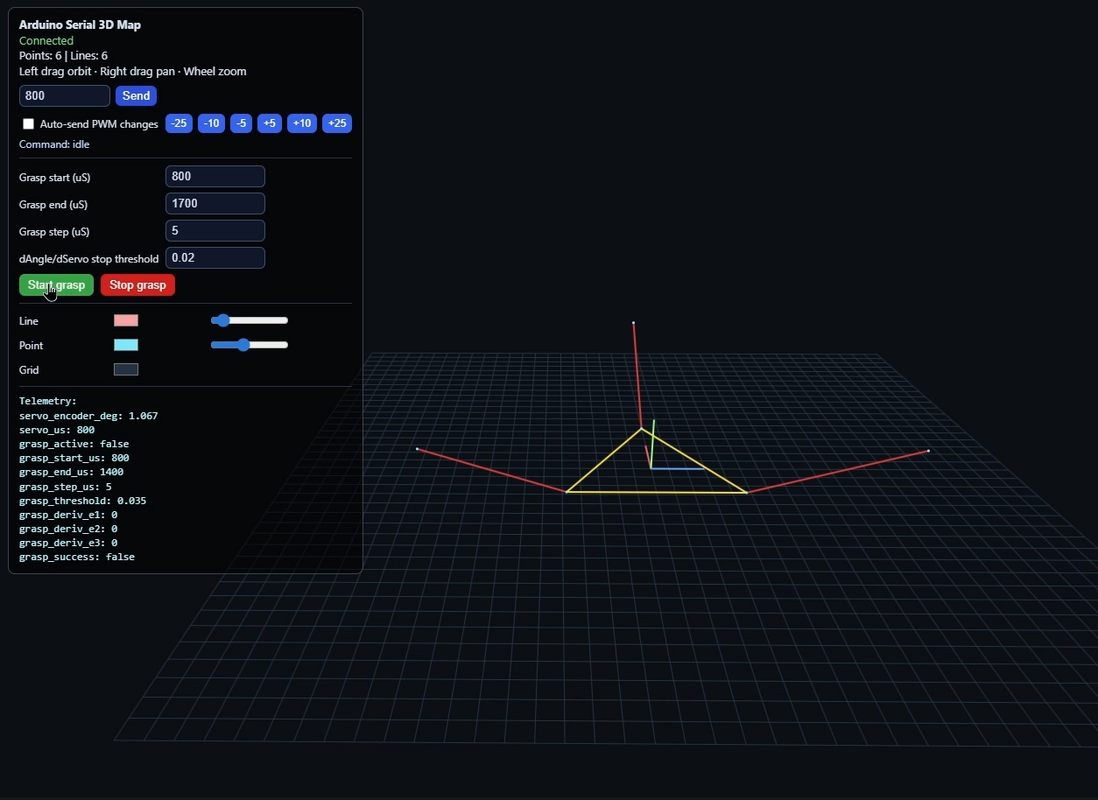
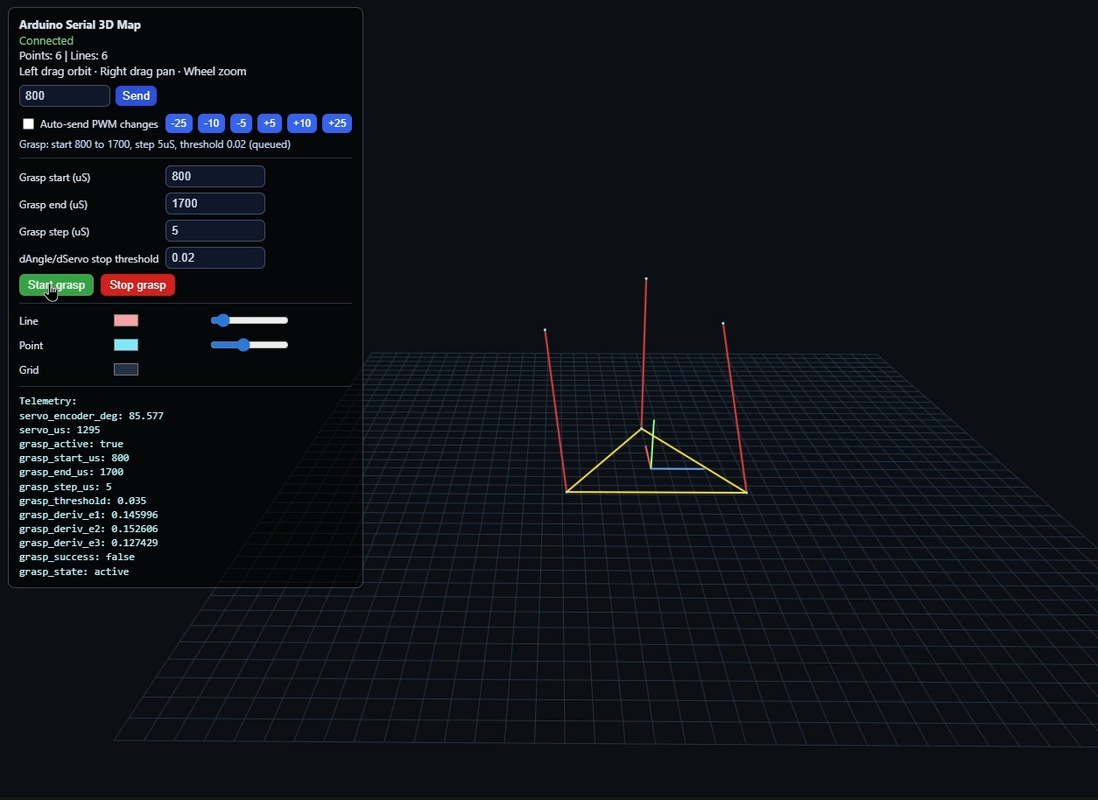
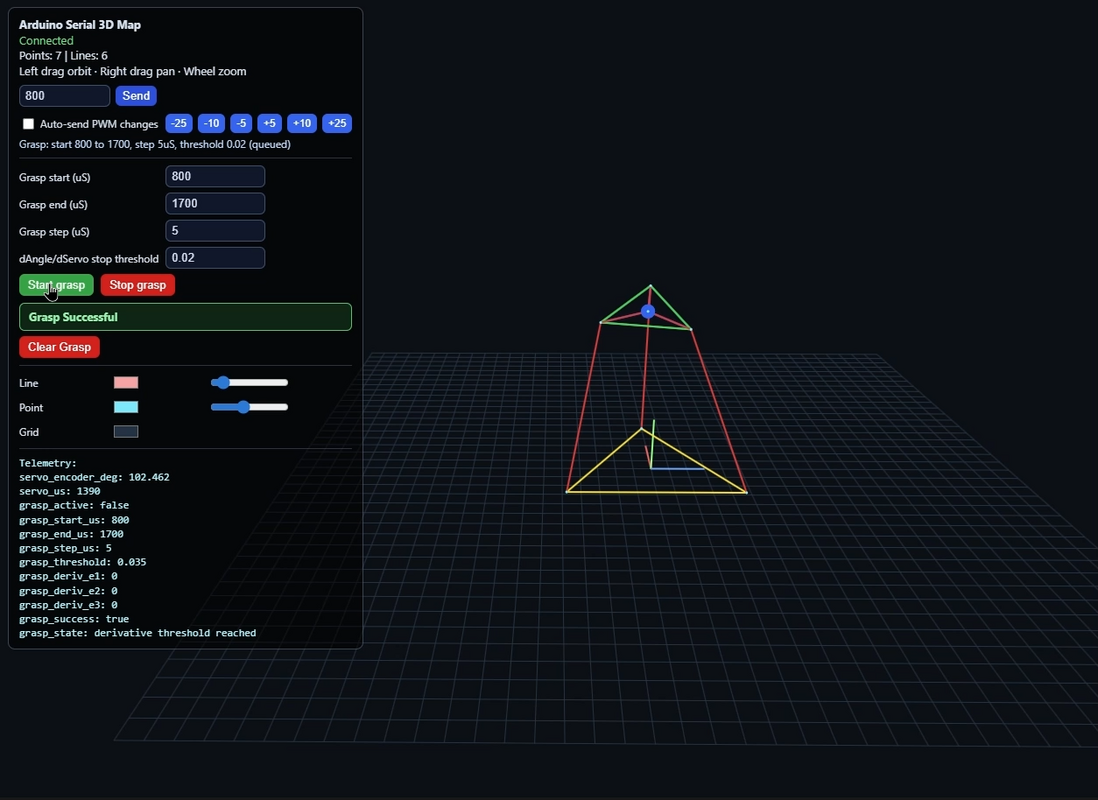
- Designed and programmed a real-time GUI and gripper controller that displayed live encoder data, commanded jaw movement, implemented the grasp-detection algorithm, reconstructed the gripper in 3D, and estimated the object’s relative location.
- Developed a derivative-based grasp-detection algorithm that recognizes when jaw motion stops despite continued motor input, automatically stopping the servo to prevent excessive force and object damage.
- Applied PWM signal processing, rolling-average filtering, hardware-timed input capture, and calibration to reduce mean angular error from 2.144° to 0.084°—a 96.08% reduction—and measurement variability by 99.2%.
- Designed experiments across five objects with varied fragility and geometry, achieving 100% grasp-and-lift success and reducing average damage from 2.6/5 to 0/5 with grasp detection.
- Reviewed research on tactile sensing, grasp estimation, underactuation, and object localization, identifying encoder-based proprioception as a simpler alternative to complex external sensors.
- Translated interviews with Vy Nguyen, Occupational Therapist at Hello Robot, and Dr. Amal Nanavati, human–robot interaction researcher, into requirements for adaptability, compliance, reliability, and user trust.
- Documented the independent research in a dissertation-style paper (attached below) and delivered a TED-style Capstone presentation to a schoolwide audience.