FTC 4410's 2025 World Championship Robot
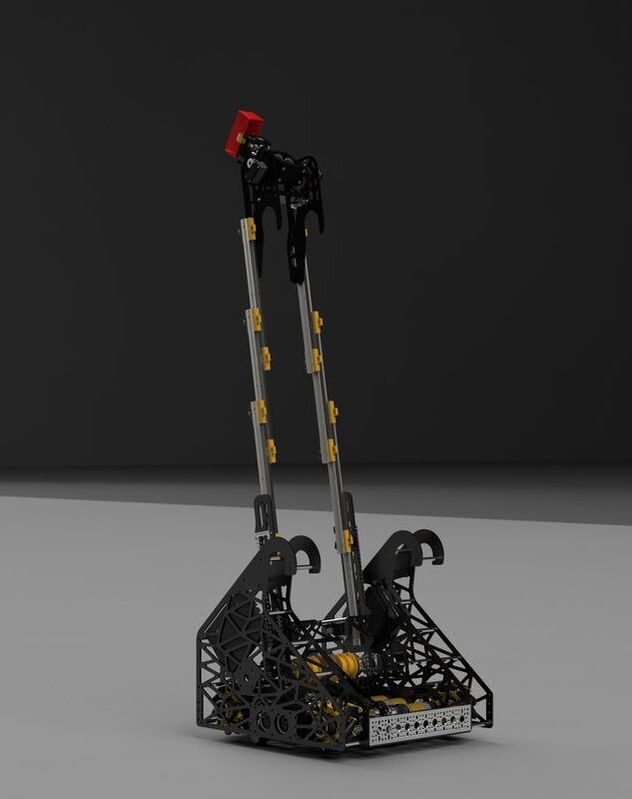
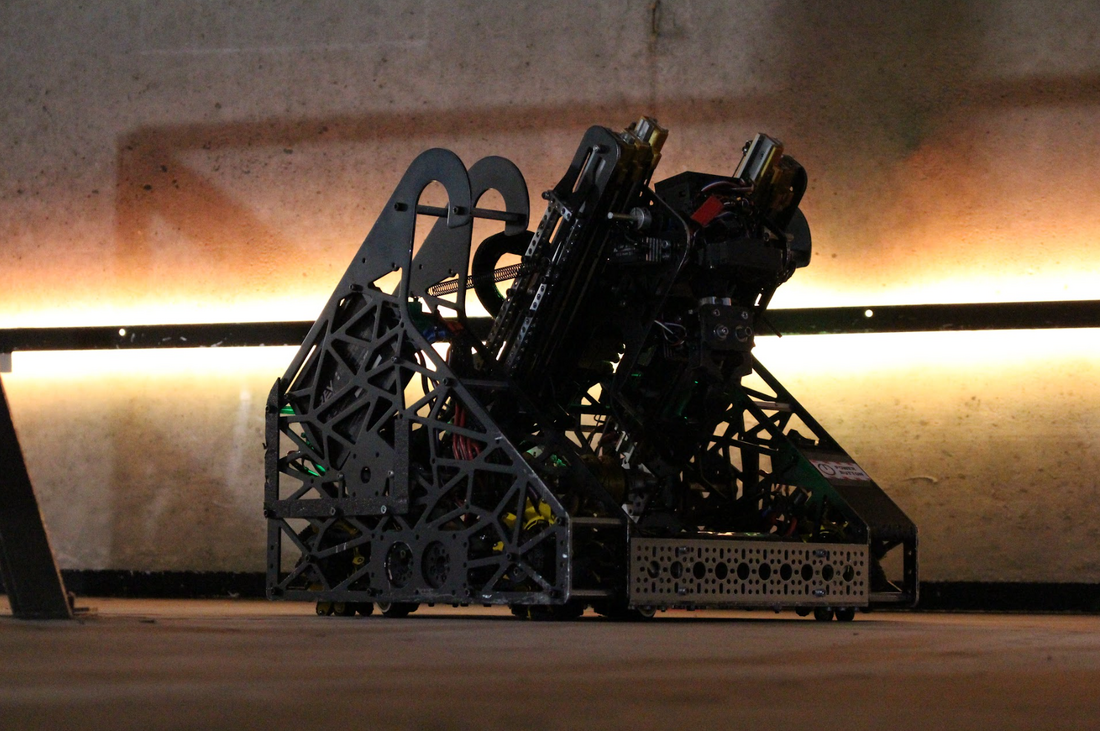
FTC 4410's 2025 World Championship Robot
September 2024 - April 2025 (11th Grade)
- Robot developed for the 2024-2025 Season, “INTO THE DEEP”
- Competition Results:
- Won 8 awards across 4 competitions (Winning Alliance Captain, Inspire Award, Control Award, etc)
- Represented Massachusetts and its 130+ teams at the FIRST World Championships in Houston, TX,
- Franklin Division Quarterfinalist and 2nd Place Control Award at World Championship, out of 8000+ teams internationally.
- 4th Highest Score in our division at the World Championships
- Three Primary Objectives:
- Robot collects “Samples” (red, yellow, & blue rectangles) from the field and place them into buckets to score them.
- Collect "Specimen" (red or blue Samples with clips attached to them) and clip them onto colored rods, called "Chambers" on a center structure.
- Climb to the highest rung of the center structure, effectively climbing multiple rungs like a ladder to lift itself up.
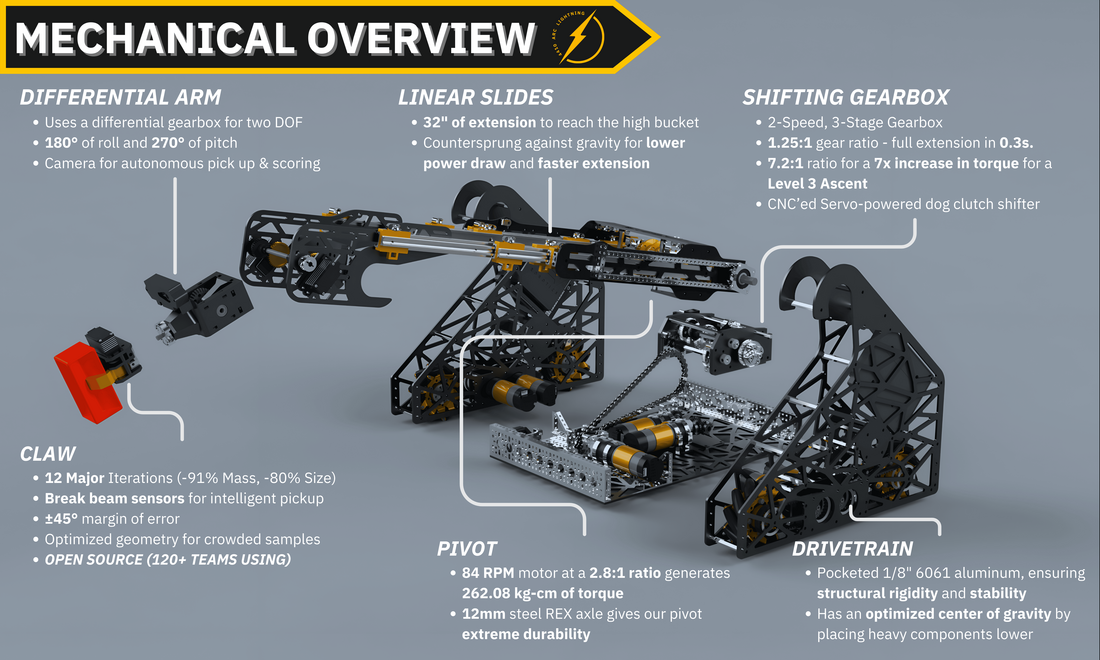
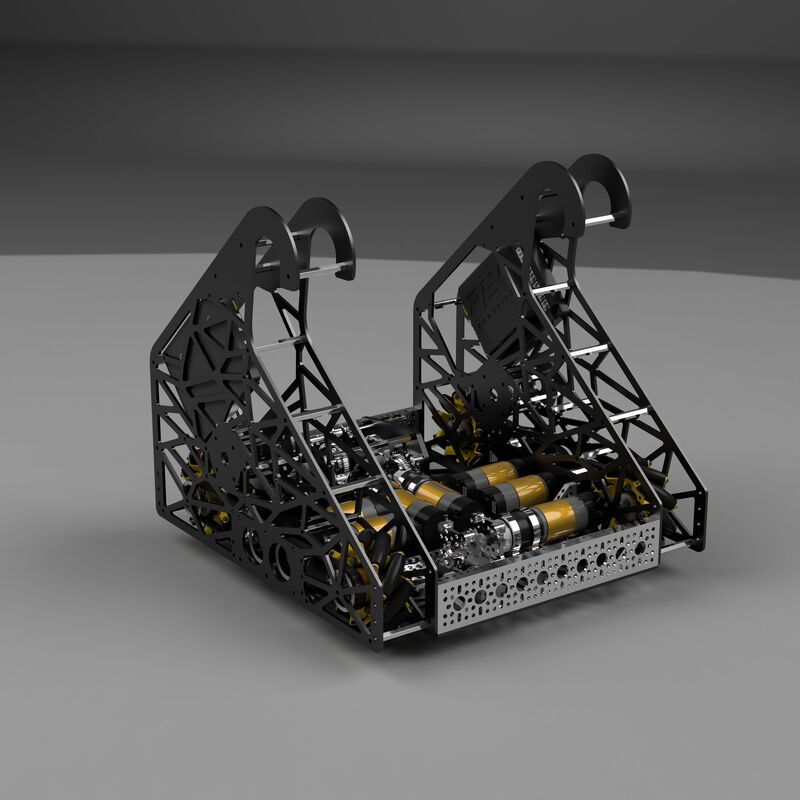
- Custom-Machined Drivetrain of pocketed 1/8" 6061 aluminum with optimized CG and insulated electronics; converted from chain to a self-tensioning belt drive to reduce backlash and improve autonomous accuracy.
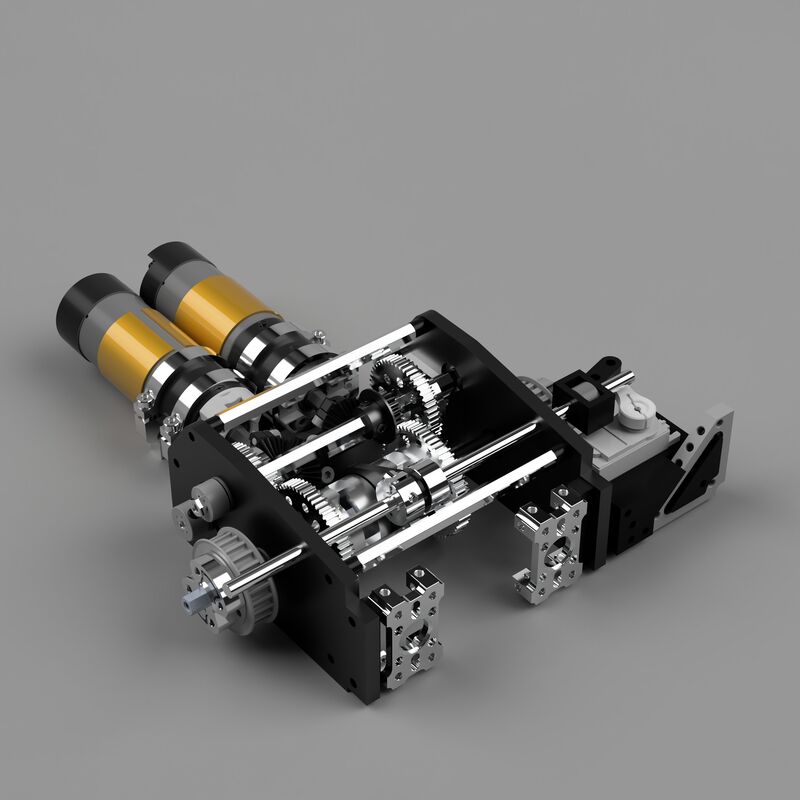
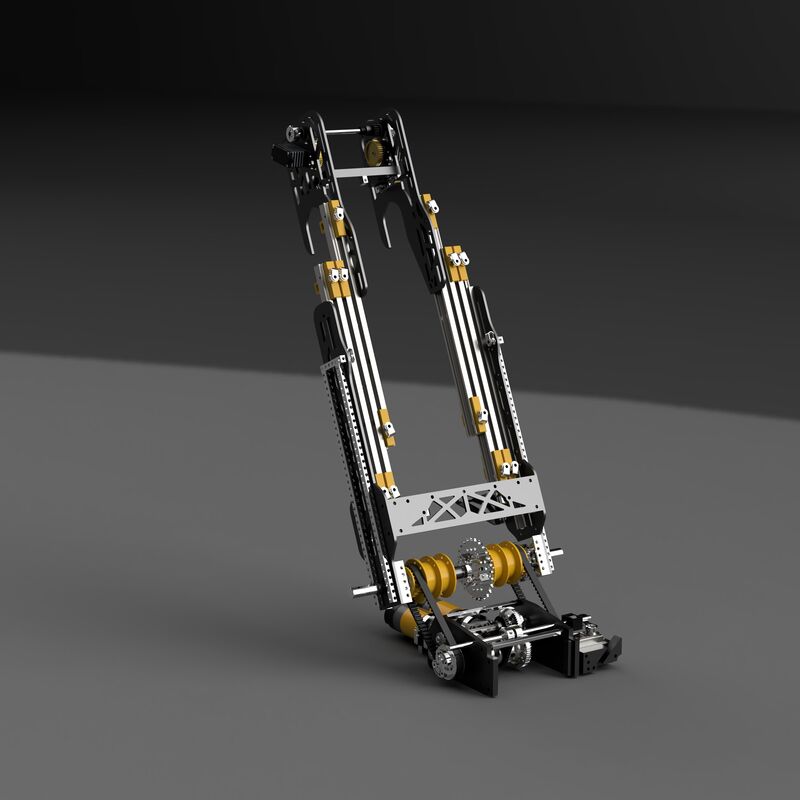
- 4-Stage Linear Slides + 2-Speed Shifting Gearbox: 0.3s extension at 1.25:1 ratio, 113.7 kg-cm torque at 7.2:1; gearbox built around a machined aluminum dog clutch with servo-actuated shifting.
- 2-Speed Gearbox allows the robot to extend rapidly when scoring normally, and operate with extreme amounts of force and torque when needing to climb/ascend.
- Pivot System: 176° range powered by an 84 RPM motor at 2.8:1 (262 kg-cm torque); spring-assisted for 94% lower current draw; hybrid chain tensioner to remove slack.
- Differential Arm: Dual-servo design providing 270° pitch and 180° roll; solved through a 4-equation kinematic system; optimized geometry reduced part size by 60% while improving rigidity.
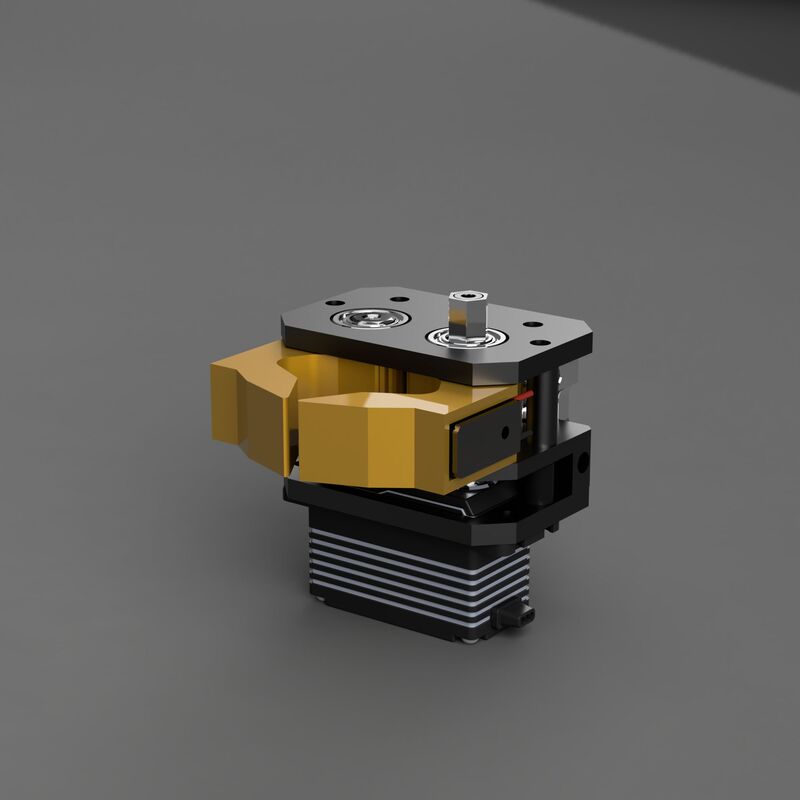
- Compact V12 Claw (62x56 mm, 72 g): ±45° intake tolerance with break-beam sensors for error detection; achieved sub-6s cycles; open-sourced and adopted by 70+ teams, including 28% of Massachusetts State Championship competitors.
- Advanced Control Stack:
- PID2F Predictive Control Loops on pivot with static and extending feedforward terms for gravitational torque compensation.
- PIDF Control on slides with feedforward tuned to pivot angle.
- Differential Arm Equations mathematically model the dynamics of the differential arm to take in absolute ground-referenced pitch and roll angles, and output coupled roll–pitch servo values.
- Trapezoidal Motion Profiles layered with closed-loop control for smooth actuation and consistent setpoint tracking.
- Setpoint-Based Inverse Kinematics enabling automatic Cartesian X/Z positioning with pitch targeting.
- Manual Inverse-Kinematics Mode allowing drivers to directly move end-effector in Cartesian space.
- Autonomous P2P Pathing Algorithm with polynomial motion profiling, reaching ±0.2" translational and ±0.5° angular accuracy.
- Sensor Fusion: 16 total sensors (encoders, IMU, break beams, current sensing, camera). The vision system calculates orientation and relative position of samples via OpenCV and homography matrices, and uses inverse kinematics to move claw to exact XYZ position and angle for reliable autonomous intaking.
- Open-Source Contributions: Released complete claw design (adopted worldwide by 120+ teams), and 6,670+ lines of Java code on GitHub, cloned by 20+ teams; shared subsystem math, design reviews, and troubleshooting with teams across Massachusetts.